

🤑 Can a Susan B. Anthony Dollar Really Be Worth $7.1 Million?
Most Susan B. Anthony (SBA) dollars are common. In fact, the majority sell for $1 to $50, even in nice condition.
But one extraordinary coin changed everything.
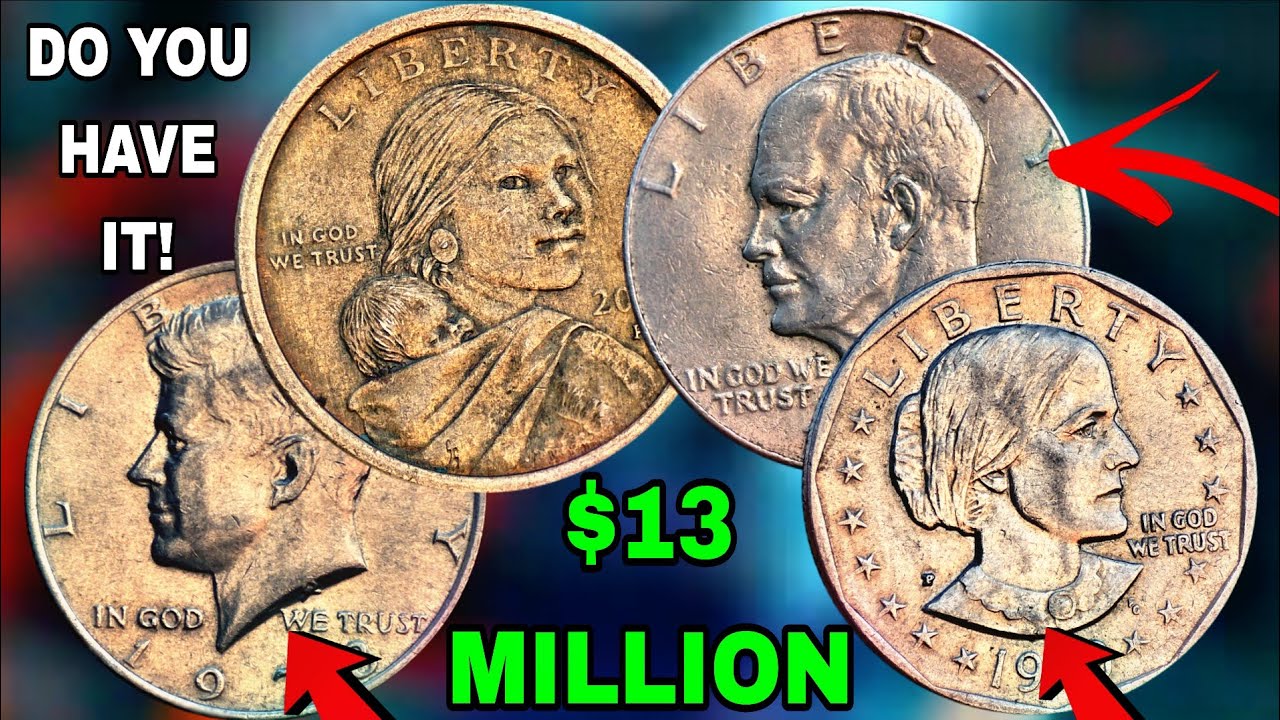
In a record-setting sale, a 1980-S Susan B. Anthony Dollar sold for an astonishing $7,115,000, making it the only U.S. coin from 1980 ever to exceed the million-dollar mark. 💎
So what made this small, often-ignored dollar coin so valuable — and is there any chance you could own one?
Let’s break it down step by step.
⭐ Step 1: Why This 1980-S Susan B. Anthony Dollar Is Worth Over $7 Million
This coin isn’t valuable because of silver content or age. Its value comes from a perfect storm of rarity, mint errors, and flawless proof condition.
✅ 1. The Correct Mint Mark Is Critical
Only one mint produced qualifying coins.
- Must have an “S” mint mark (San Francisco)
- Coins with P or D mint marks are automatically excluded
- San Francisco struck proof-only SBA dollars in 1980
📌 No “S” mint mark = no million-dollar value.
✅ 2. A Nearly Impossible Triple-Error Combination
What truly sets this coin apart is the presence of three separate mint errors on a single proof strike — an extremely rare occurrence.
🔧 The Three Errors Explained:
- Double-Struck Obverse
Visible doubling along the portrait, rim, and devices - Misaligned Die Error
Approximately 15% off-center between strikes - Broken Collar Error
Causes distorted or uneven edge reeding
🧠 This exact combination is what made the coin historically significant.
✅ 3. Premium Proof Specifications (Non-Negotiable)
Even with errors, the coin must meet elite proof standards to reach top value.
To qualify, it must have:
- 🌟 Deep cameo mirror finish
- ❄️ Frosted portrait, lettering, and date
- ⚖️ Exact weight: 8.1 grams
- 🏅 Certified PCGS PR-70 DCAM (perfect grade)
📉 Any grade below PR-70 dramatically reduces the value.
🔍 Step 2: How to Spot a Potential $7 Million Error Coin
Use a 10× loupe or magnifier and inspect the coin carefully under strong light.
🔎 1. Surface Inspection
Look for:
- ✅ Dual concentric strike rings
- ✅ A ghost-like second portrait image
- ✅ Slight misalignment between obverse and reverse
These are classic indicators of multiple strikes.
🔎 2. Edge Examination
Examine the edge closely:
- ✅ Broken, uneven, or distorted reeding
- ✅ Thickness variation between 2.8–3.1 mm
- ❌ Any visible seam usually indicates a cast fake
🛑 Clean, uniform edges usually mean a normal coin.
🔎 3. Weight & Size Test
Use a digital jeweler’s scale and calipers:
- ⚖️ Weight: 8.1 g ± 0.01 g
- 📏 Diameter: 26.5 mm
- 📐 Center thickness: 2.0 mm
🚨 Incorrect measurements are a major red flag.
📊 Step 3: Quick Comparison Table
| Feature | $7.1M Error Coin | Normal 1980 SBA Dollar |
|---|---|---|
| Strike | Double-struck | Single strike |
| Alignment | ~15% misaligned | Perfect |
| Edge | Irregular reeding | Uniform |
| Finish | Deep cameo proof | Standard |
| Typical Value | $7,115,000 💰 | $1–$50 |
⚠️ Step 4: Beware of Common Counterfeits
Due to its fame, fake examples are everywhere. Avoid coins showing:
- ❌ Electroplating (incorrect weight)
- ❌ Tool marks near the mint mark
- ❌ Soft or blurry details from casting
⚠️ If a coin looks too rough or too perfect, proceed with caution.
🛡️ Step 5: Proper Authentication Is Essential
If your coin looks promising, do not sell it raw.
✅ Required Steps:
- 🏅 Submit to PCGS or NGC (Errors & Varieties tier)
- 🧪 Request XRF metal composition testing
- 📜 Verify provenance and ownership history
📌 Without top-tier certification, even genuine error coins will not achieve premium prices.
✨ Final Thoughts
The $7.1 million 1980-S Susan B. Anthony Dollar is a once-in-a-generation discovery — combining perfect proof condition with multiple mint errors on a single strike.
While finding one is extremely unlikely, understanding:
- Mint marks
- Error types
- Proof standards
- Certification
can help you spot real rarities, avoid counterfeits, and make smarter collecting decisions.
In numismatics, every detail matters. 🪙💎
Leave a Reply