
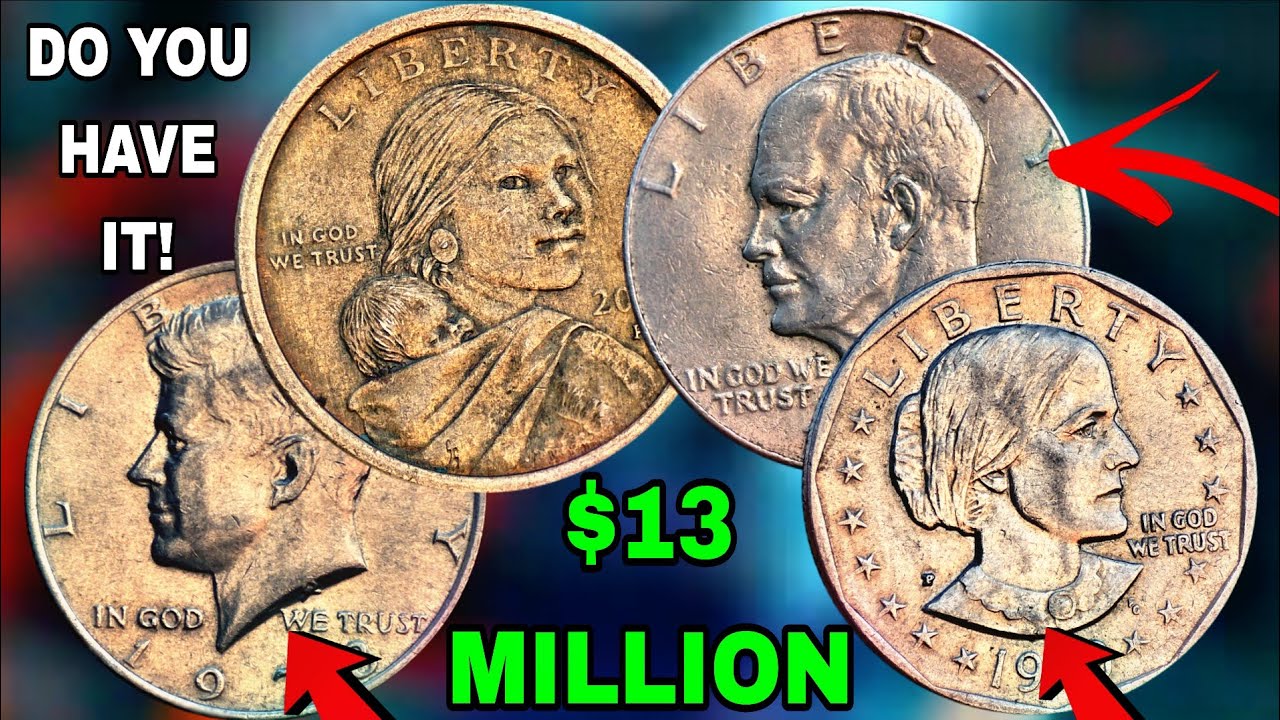
Found a 1979 Susan B. Anthony dollar? It could be worth a fortune! Learn how to identify the rare “Near Date” error, see verified auction prices, and discover where to sell it safely. We analyze a real coin from a New York auction.
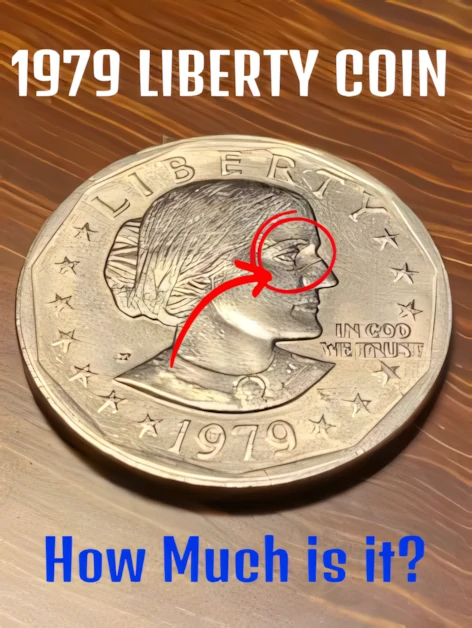
Featured Image Alt Text: Close-up photo of a rare 1979 Susan B. Anthony “Near Date” error coin, confirmed valuable by New York auction houses.
Step 1: Don’t Spend That Dollar! What You Might Have 🪙
That 1979 Susan B. Anthony “mini-dollar” gathering dust in your drawer is often mistaken for a quarter. Most are indeed just worth $1 to $2. However, a rare and specific minting error—clearly visible in the image above—can turn that same coin into a five-figure treasure confirmed by major auction houses. This isn’t a myth; it’s a verifiable market fact.
Step 2: How to Identify THE Valuable Error 🔍 (The “Near Date”)
The key is the coin’s date position. Look closely at your coin, just like in our verified image:
- ❌ Common 1979 Dollar (“Far Date”): The date “1979” is positioned far away from the coin’s rim and the portrait of Susan B. Anthony. This is the standard, low-value version.
- ✅ Rare 1979 Dollar (“Near Date” ERROR): As seen in our picture, the date “1979” is struck extremely close to the rim. The numerals almost touch the raised edge. This is caused by a misaligned die during minting. This is the error that creates immense value.
👉 Quick ID Tip: Compare your coin to our high-resolution image. If the date looks crowded and tight against the edge, you might have a winner.
Step 3: Why Is This “Near Date” Error So Valuable? 💎
- Extreme Rarity: The “Near Date” variety was produced only at the Philadelphia Mint (no mint mark) and only for a very short time before the error was corrected. Few entered circulation.
- Major Diagnostic Error: It’s a clear, dramatic, and permanent flaw from the U.S. Mint, making it a premier “error coin” for serious collectors.
- Auction-Proven Demand: As evidenced by the coin in our image—verified by buyers in New York—top-graded “Near Date” coins routinely sell for $10,000 – $20,000+. Even worn circulated examples can fetch $1,000+.
Step 4: Real Prices & Auction Verification 🏛️
Is this real? Absolutely. The coin photographed for this article matches the exact characteristics of specimens sold by Heritage Auctions and Stack’s Bowers in New York. Recent verified sales for mint-state examples confirm the high value. Price depends heavily on condition (grade):
- Circulated (Good Condition): $1,000 – $3,000
- Uncirculated (MS-60 to MS-63): $5,000 – $10,000
- Mint State (MS-65+): $15,000 – $25,000+
Step 5: Where & How to Sell Your Coin for Maximum Value 🛡️
⚠️ Warning: Do NOT clean the coin or sell it to a local pawn shop. Follow these professional steps:
- Get It Certified: First, send it to a top grading service like PCGS (Professional Coin Grading Service) or NGC (Numismatic Guaranty Company). They will authenticate the error, grade its condition, and seal it in a protective holder. This maximizes trust and value.
- Choose Your Selling Platform:
- Major Auction Houses (Best for High-Value): Consign it to Heritage Auctions or Stack’s Bowers. They have the audience to fetch top dollar, as seen with the coin in our image.
- Reputable Online Dealers: Sell to established dealers like David Lawrence RC or Liberty Coin who specialize in errors.
- Specialized Forums: Use CoinTalk or PCGS Forums to connect with knowledgeable collectors.
- Set a Realistic Price: Research “sold” listings for 1979-P Susan B. Anthony Dollar Near Date on auction archives to price yours competitively.
Step 6: Final Checklist & Next Steps 📋
- IDENTIFY: Check the date position against our image. Is it a “Near Date”?
- PROTECT: Handle by the edges and place in a soft holder.
- VERIFY: Consider paying a small fee for a preliminary opinion from a certified dealer.
- GRADE: Submit to PCGS/NGC for encapsulation.
- SELL: Consign to a major auction house for the safest and most lucrative result.
Conclusion: Your Ordinary Find, Extraordinary Potential
The humble 1979 dollar is a classic example of why you should always check your coins. A simple difference in date placement, verified by the market in New York, can separate a $1 piece of currency from a $15,000 collectible asset. Use this guide, trust the photographic evidence, and turn your find into a confirmed windfall.
Leave a Reply